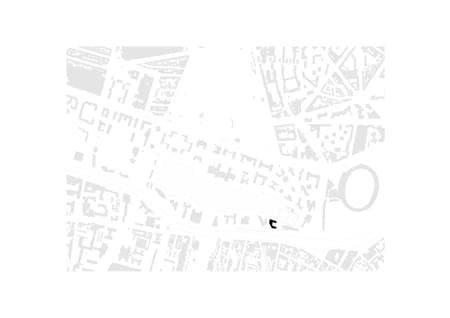
The Cité Internationale Universitaire de Paris (CIUP), founded in 1925 in Paris’ 14th arrondissement, is a place promoting multicultural exchange and international peace. The Egypt House is part of the third development phase of CIUP (“Season 3”, 2012–2025), which includes ten new houses and accommodation for 1,800 additional residents.
An agreement signed in 2017 initiated its construction to strengthen academic cooperation between France and Egypt and to promote Egyptian culture in Paris through cultural, academic, and artistic events.
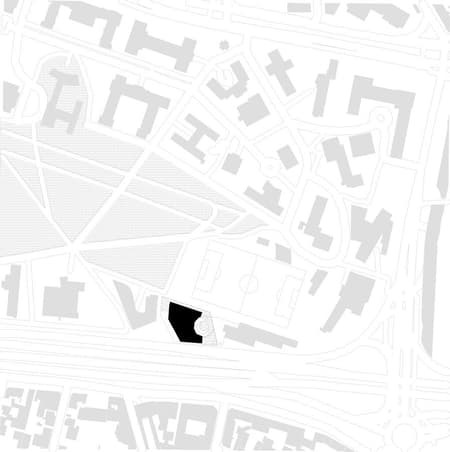
A 1,915 m² site was allocated for the project, located near the Korean House and Le Corbusier’s Brazilian House. The competition launched in 2019 called for a building with 195 rooms, a cultural hall, and shared spaces, intended for 70% Egyptian students and 30% international students.
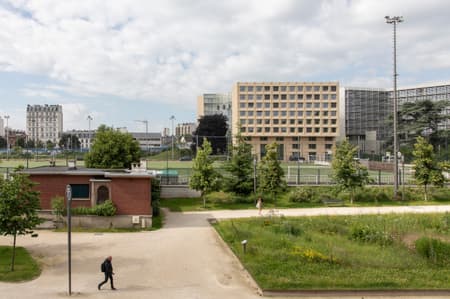
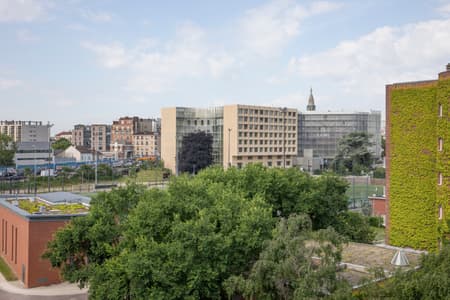
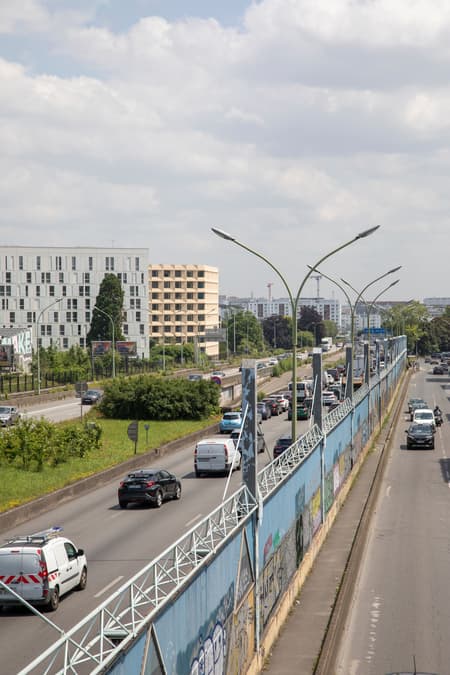
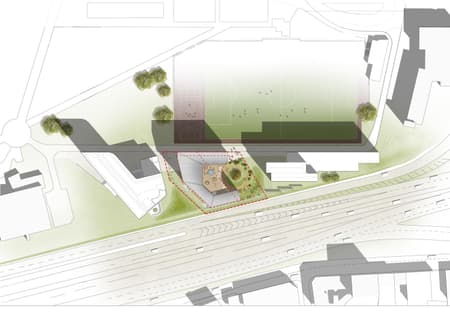
Located in the southern part of the CIUP, the house is bordered by the Dalmasso Stadium to the north, the Paris ring road to the south, and the Korean House to the west.
Several constraints guided the form and layout of the project: a 10‑metre setback around the purple beech tree at the centre of the plot, and the buildable limits defined by the urban planning regulations.
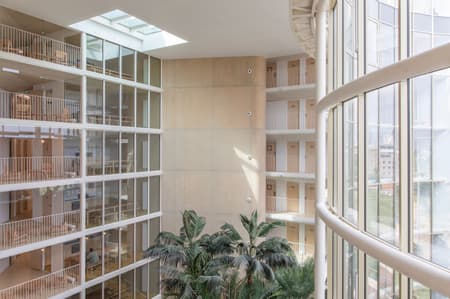
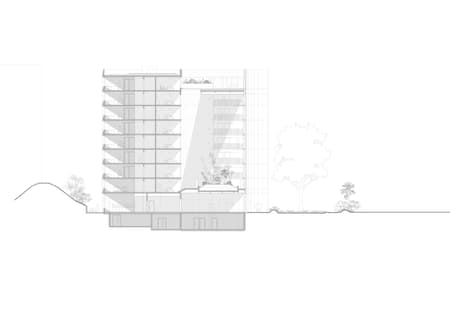
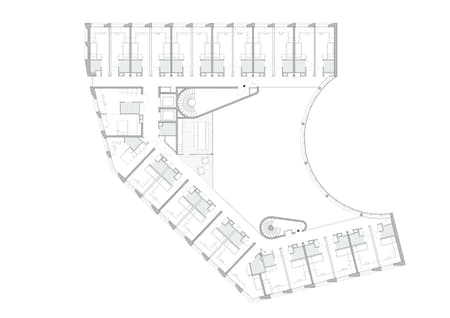
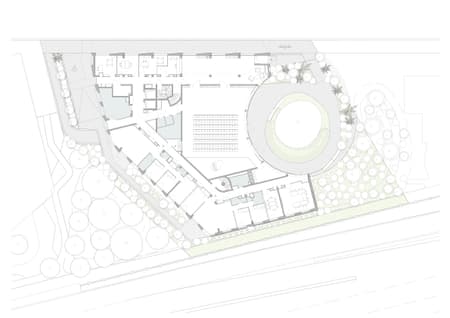
The building occupies the entire site and cantilevers northward from the third floor upwards, organising the programme around a central atrium protected from the ring road and open to sunlight.
The Egypt House creates an architectural dialogue between Egyptian and French cultures through three themes
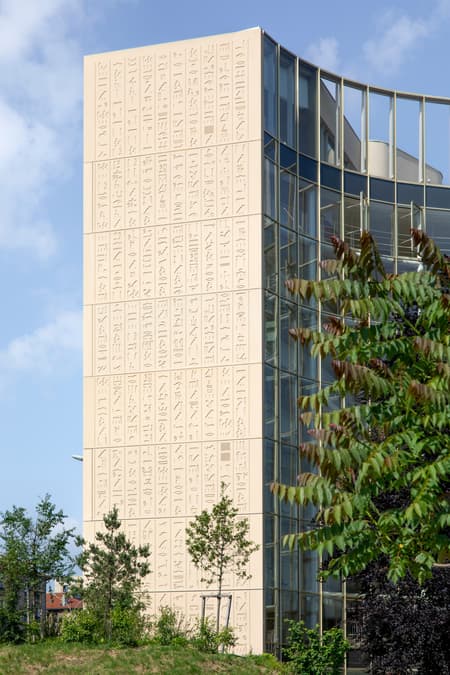
Symbolism: a monolithic volume inspired by Egyptian constructions, made of protective sandblasted ochre concrete, opened to the east by a glazed façade connecting the atrium and the garden, while bringing maximum natural light.
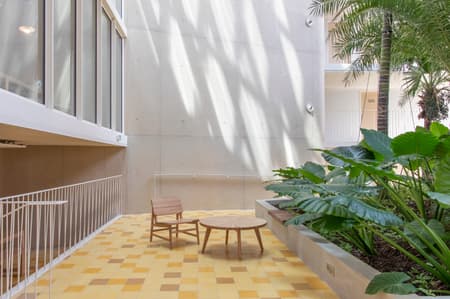
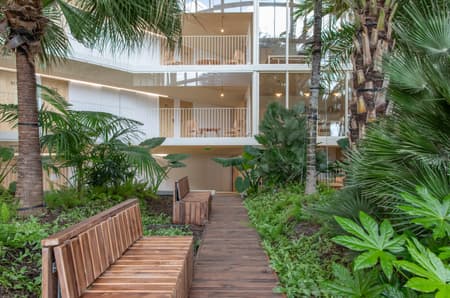
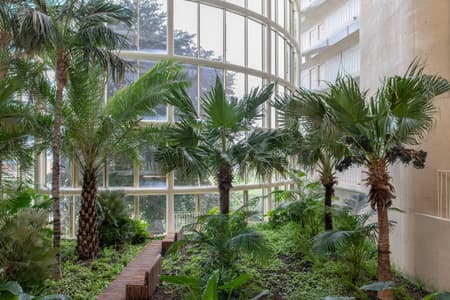
Landscape: an exterior garden enhanced by the purple beech tree, and an interior glazed garden recreating an oasis of Egyptian vegetation at the heart of the building.
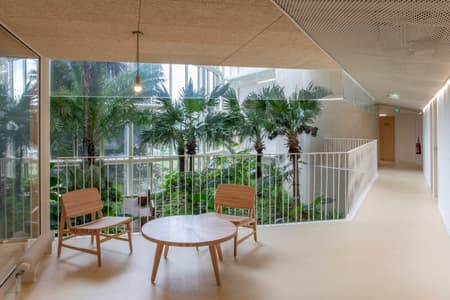
Space: kitchens, dining rooms, and bedrooms are organised around the glazed atrium. The naturally lit walkways provide comfort and conviviality. The top floor includes a solarium completing the collective spaces.
Stone, a symbol of depth and eternity, is transposed into tinted and sandblasted prefabricated concrete, combining tradition and modernity.
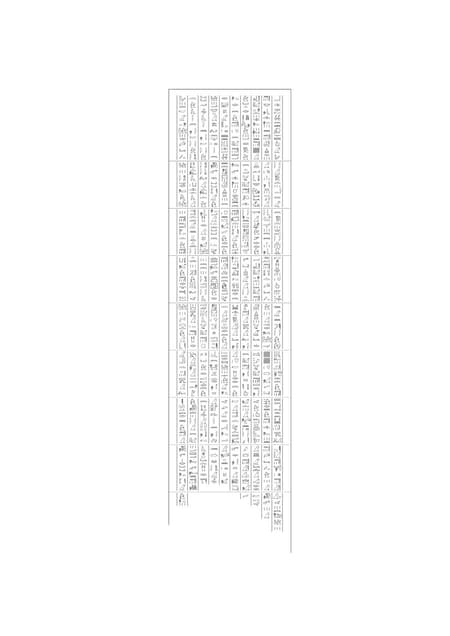
The eastern façade is adorned with engraved texts about the pursuit of knowledge, excerpts from the Prayer to Thoth and from the scribe’s profession of faith in the Lansing Papyrus: “Writing brings more happiness than bread and beer,” a maxim particularly cherished by students.
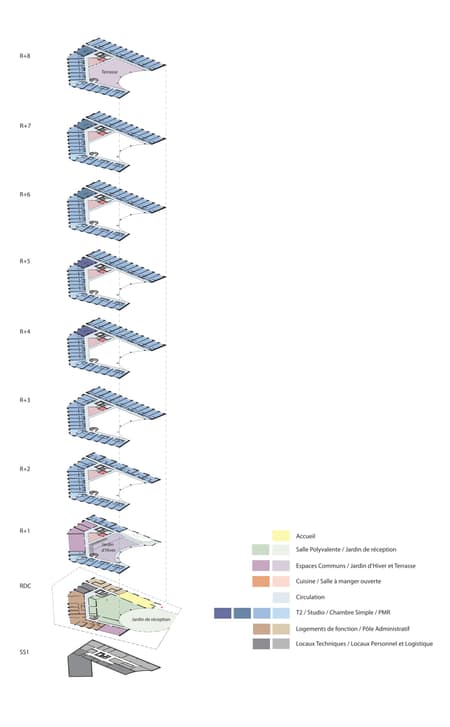
The project is an 8‑storey accommodation building with a total of 195 units: 177 single rooms 8 accessible rooms for persons with reduced mobility 7 studios 3 one‑bedroom apartments
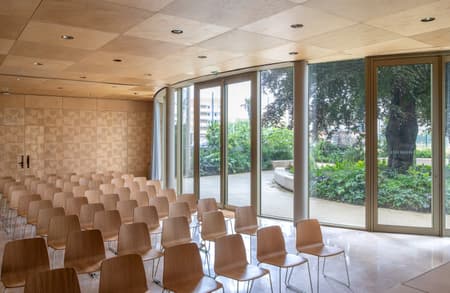
Ground floor: entrance hall, multipurpose hall opening onto the garden, administrative offices, staff housing, and study rooms.
First floor: interior garden, large terrace, common spaces (student lounge, music room, sports room, committee office).
Upper floors: accommodation units and shared kitchens.
Top floor: solarium covering the atrium.
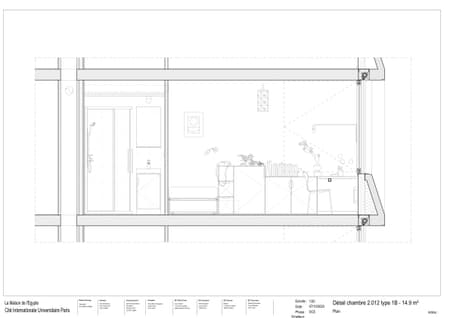
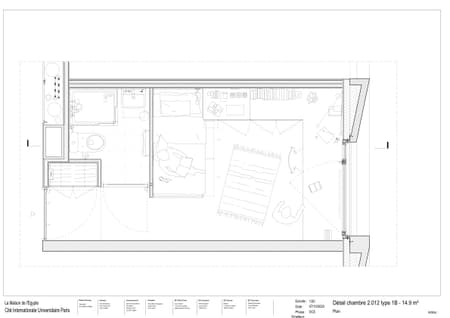
The 15 m² rooms integrate fixed and interlocking furniture to optimise space
Clear separation between service spaces (entrance, bathroom) and living spaces along the façade. Respect for the planned furniture dimensions.
Functional and warm architectural expression through noble materials such as birch plywood. Maximisation of freely usable circulation space.
The interiors are punctuated with references and works reflecting this dual Franco‑Egyptian culture, achieved through collaborative work with Egyptian artists and craftsmen.
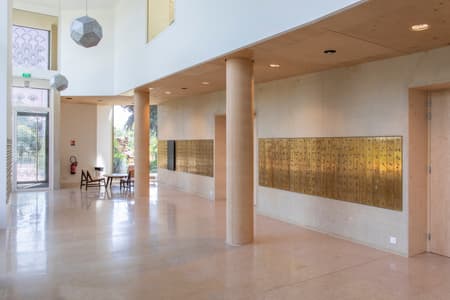
The entrance hall: perforated metal panels depicting the Relief from the Tomb of Horemheb in Saqqara, Egypt, and papyrus flowers. Inside, light fixtures by Randa Fahmy inspired by traditional ornaments, and a frieze of “modern hieroglyphs” designed by architect Waleed Arafa, transforming the project logo into pictograms of student life. The project logo also serves as the building signage.
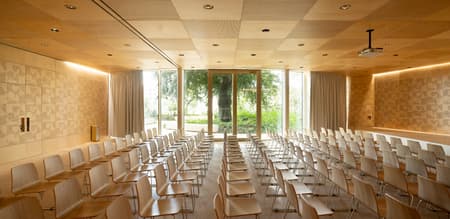
The multipurpose hall: birch acoustic panels perforated with papyrus motifs often found in ancient friezes.


.jpg?w=450&q=75&dpl=dpl_6NKhQbYoNKZ4YGsW1tKTDHjTc7uH)
.jpg?w=450&q=75&dpl=dpl_6NKhQbYoNKZ4YGsW1tKTDHjTc7uH)
.jpg?w=450&q=75&dpl=dpl_6NKhQbYoNKZ4YGsW1tKTDHjTc7uH)
.jpg?w=450&q=75&dpl=dpl_6NKhQbYoNKZ4YGsW1tKTDHjTc7uH)
.jpg?w=450&q=75&dpl=dpl_6NKhQbYoNKZ4YGsW1tKTDHjTc7uH)
.jpg?w=450&q=75&dpl=dpl_6NKhQbYoNKZ4YGsW1tKTDHjTc7uH)
.jpg?w=450&q=75&dpl=dpl_6NKhQbYoNKZ4YGsW1tKTDHjTc7uH)
 (1)-1.jpg?w=450&q=75&dpl=dpl_6NKhQbYoNKZ4YGsW1tKTDHjTc7uH)